
From the Sensex pack, Adani Ports, Tata Steel, Power Grid, Mahindra & Mahindra, NTPC, Tech Mahindra, Tata Motors, ITC, Nestle India, HCL Technologies, Bharti Airtel, State Bank of India, Asian Paints and Kotak Mahindra Bank were the gainers. Bajaj Finance, IndusInd Bank, HDFC Bank, and Zomato were the laggards.

The rupee breached 90-levels against the greenback for the first time on Wednesday, falling 6 paise to 90.02 in early trade, as banks kept buying US dollars at higher levels and FII outflows continued.

Macroeconomic data announcements, global trends and trading activity of foreign investors would be major driving factors for market movement this week, analysts said. Unabated capital infusion by domestic institutional investors have supported the positive trend in the stock market last week, traders said.

Among the Sensex firms, Kotak Mahindra Bank, Bajaj Finserv, Bajaj Finance, Adani Ports, Trent, State Bank of India, Titan and Tata Consultancy Services were the laggards. However, Maruti, Infosys, NTPC, Asian Paints, Eternal and Hindustan Unilever were among the biggest gainers.

A host of macroeconomic data announcements, global trends and trading activity of foreign investors would dictate investors' sentiment in the stock market this week, analysts said. Besides, auto sales data will be closely tracked, experts noted.

India's manufacturing sector growth moderated in August as output and sales rose at slowest rates since January, while competitive pressures and inflation concerns hampered business confidence, a monthly survey said on Monday. The seasonally adjusted HSBC India Manufacturing Purchasing Managers' Index (PMI) stood at 57.5 in August, below July's reading of 58.1 but above its long-run average of 54.0, signalling a substantial improvement in operating conditions.
Strong new business growth was the primary factor.

Quarterly earnings, macroeconomic data announcements and global trends will drive the Indian stock markets in a holiday-shortened week, analysts said. Stock markets would remain closed on Wednesday for the Guru Nanak Gurpurab holiday.
The RBI left interest rates unchanged, saying there was no substantial development on inflation or fiscal fronts to warrant a fresh reduction.

'Listing of scaled Indian subsidiaries of multinational corporations as well as of Indian conglomerates continues to remain a key theme for IPOs in India.'

Among Sensex firms, Eternal, Tata Motors, State Bank of India, Adani Ports, NTPC, IndusInd Bank, Bajaj Finance, Asian Paints, Axis Bank and Sun Pharma were the major losers. Bharti Airtel, Tata Steel, Mahindra & Mahindra, Hindustan Unilever, Nestle and Maruti were among the gainers.

The HSBC/Markit purchasing managers index for the services industry inched up to 47.1 in October from 44.6 in September, the fourth successive monthly contraction of service sector output across India.
As many as 40 staffers, in the key equities and investment banking division in India, could be asked to go as part of the London-headquartered lender's global layoffs, said people aware of the development. HSBC India declined to comment.
It had entered the segment by pumping in over $290 million.

The HSBC/Markit Purchasing Managers Index for the services industry fell to 46.7 in December from 47.2 in November, registering the sixth consecutive monthly drop in output levels, the longest period of continuous reduction since the 2008/2009 global financial crisis.

Titan, Nestle, Hindustan Unilever, State Bank of India, Larsen & Toubro, ITC, Zomato and Bajaj Finserv were also among the laggards. Adani Ports, IndusInd Bank, Tata Motors and HDFC Bank were among the major gainers.

HSBC Holdings Plc will shut its private banking business in India, a spokesman said
Bajaj Finance, IndusInd Bank, State Bank of India, Maruti, Tata Motors, ITC, Tata Steel and Reliance Industries were also among the gainers. Nestle, NTPC, Kotak Mahindra Bank, Power Grid and Titan were among the laggards.

The HSBC India Services Business Activity Index, that tracks changes in activity at Indian services companies on a month-by-month basis, fell from 51.6 to exactly 50.0 in October.

'Within India, people want high-quality, personalised banking services, and the demand for such services has exploded.'

Last fortnight, State Bank of India Chairman C S Setty lifted the veil on a subject long spoken of in corporate corridors: Why can't our banks finance mergers and acquisitions (M&As)? Change is in the air: Indian Banks' Association (of which Setty is the chairman) is to "make a formal request" to Mint Road to make way for it. Thus far the exclusive turf of foreign banks even though its funding remains offshore - as in, it's not on these entities rupee-book (and a few select shadow banks) - a most lucrative segment in the investment banking suite, M&As, will be homeward-bound.

The HSBC India Composite Output Index, which maps both services and manufacturing activity, fell to 48.4 in July, down from 50.9 in June, indicating an overall contraction.

The HSBC Services Purchasing Managers' Index eased to 53.0 in March from February's eight-month high of 53.9.

Neo banks, along with mid-sized banks, are establishing global capability centres (GCCs) in India, mirroring the expansion strategies of larger global counterparts. This trend is being seen as the next major wave in the country's banking, financial services, and insurance (BFSI) sector.
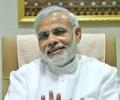
The headline HSBC Services Business Activity Index was at a 17-month peak of 54.4 in June rising from a modest 50.2 in May, HSBC said adding that 'the Modi wave has struck the service sector'.

The HSBC Emerging Markets Index, a monthly indicator derived from Purchasing Managers' Index surveys, inched up to 50.6 in May from 50.4 in April, indicating weak output growth across global emerging markets.

More than 30 technology startups, collectively valued at $100 billion, are poised to go public by 2027, signalling a potential rebound in India's stock market activity, according to a report by investment bank The Rainmaker Group. Walmart-owned Flipkart, financial technology (fintech) leader PhonePe, SoftBank-backed Lenskart, Razorpay, Zetwerk, and Meesho are among the top companies preparing to go public in India.

Meanwhile, outlook for global emerging markets remained relatively weak in September.

The US Trade Representative noted that India's average applied tariff rate stood at 17% per cent, the highest of any major world economy.

Among the Sensex firms, Larsen & Toubro, Tata Consultancy Services, Infosys, HCL Technologies, Hindustan Unilever, Axis Bank, ICICI Bank and Wipro were the major gainers. Nestle India, Asian Paints, JSW Steel, Kotak Mahindra Bank and HDFC Bank were among the losers.
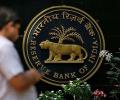
Concerned over the rise in mis-selling of products by banks and non-banking financial companies (NBFCs), the Reserve Bank of India (RBI) is examining whether to come up with norms to curb such practices. Observing that pushing financial products, such as insurance, indiscriminately to unaware consumers may be detrimental to their well-being, RBI Deputy Governor M Rajeshwar Rao said, "We are examining whether it necessitates framing of guidelines to address mis-selling of financial products and services by REs (regulated entities)."

The HSBC/Markit Purchasing Managers Index for the services industry inched up to 47.2 in November from 47.1 in October, the fifth sub-50.0 reading and indicated an output contraction across the Indian service economy.

Among the Sensex firms, JSW Steel, Tata Steel, Tech Mahindra, Infosys, Wipro, Tata Consultancy Services, Nestle, HCL Technologies, HDFC Bank and Maruti were the major laggards. IndusInd Bank, ITC, Bharti Airtel and State Bank of India were among the winners.

New business orders fall at faster pace, with index at 47.6 in March from 49.5 in February.

Geopolitical developments between India and Pakistan, quarterly earnings and macro data will be the key drivers of stock markets in the holiday-shortened week, say analysts.

The index went below the crucial 50 mark.

The HSBC India Composite Output Index, which maps both services and manufacturing, increased from 48.9 in March to 49.5 in April, but remained below the crucial 50 mark which indicates contraction for the second successive month.

British banking major HSBC on Thursday announced a consolidation exercise under which it will almost halve the number of branches in the country to 26, which will lead to 300 job losses.


China posted the sharpest increase in output for 15 months, while India saw the steepest expansion since February 2013.
 © 2026 Rediff.com - Advertise with us - Disclaimer - Privacy Policy - Sitemap - Feedback - About us - Terms of use - Grievances